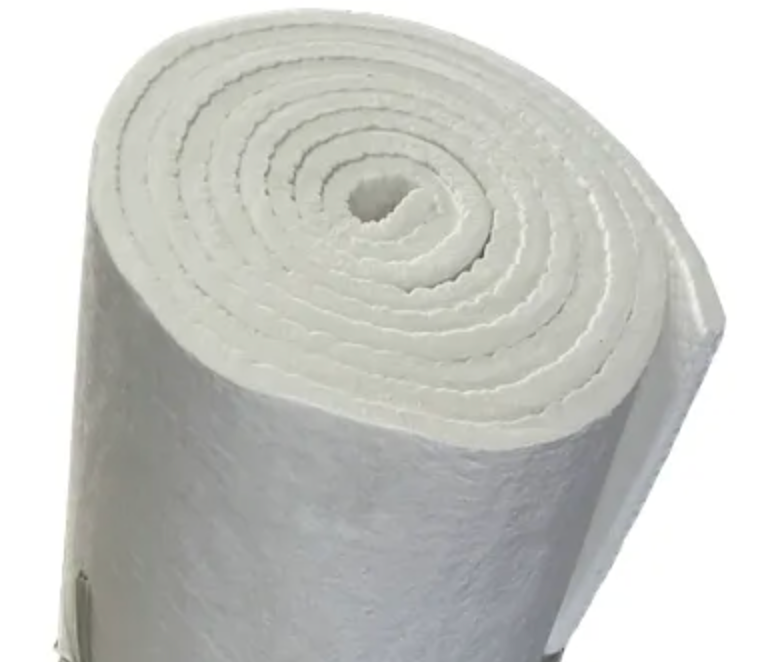
Get U Value Calculation and comparison sheet to find and select most suitable insulation materials for your use. Heat Insulation made of Fire Resistant Insulation Inorganic Mineral Fibers at Wedge India for walls, roofs, tank, foundations, floors cold and hot insulation.
The U-value (thermal transmittance) is calculated based on the materials that make up a building element (such as a wall, roof, window, or floor) and their respective R-values (thermal resistance). To calculate the U-value, you need to know the R-value of each material in the assembly and the total R-value of the system. The U-value is the inverse of the total R-value.
Key Points About U-Value
1. Lower U-Value = Better Insulation
A lower U-value indicates better insulation and less heat loss or gain. Materials with lower U-values are more effective at preventing heat from passing through.
For example, windows with a U-value of 1.0 W/m²·°C are better at insulating than windows with a U-value of 2.0 W/m²·°C.
2. Units
U-values are typically measured in watts per square meter per degree Celsius (W/m²·°C) or watts per square meter per degree Kelvin (W/m²·K).
3. Applications
U-values are commonly used in building construction to measure the thermal performance of walls, roofs, floors, windows, and doors.
They are an essential factor in energy-efficient building designs, as lower U-values reduce energy consumption for heating and cooling.
Examples of U-Values
• Uninsulated wall: U-value around 1.0 to 1.5 W/m²·°C.
• Insulated wall: U-value around 0.2 to 0.5 W/m²·°C.
• Single-pane window: U-value around 5.0 W/m²·°C.
• Double-glazed window: U-value around 1.6 to 2.0 W/m²·°C.
• Triple-glazed window: U-value around 0.8 to 1.2 W/m²·°C.
U-Value for Complex Structures (with Air Gaps)
For elements that include air spaces or gaps (e.g., windows), you must also account for the thermal resistance of air gaps and surfaces, which have their own R-values.
Key Considerations
Higher R-values of materials lead to lower U-values, indicating better insulation.
Units: The U-value is expressed in W/m²·°C, meaning watts of heat passing through a square meter per degree Celsius of temperature difference.
Improving U-Values
Adding layers of insulation, using materials with higher R-values, and improving construction techniques can reduce U-values and enhance the overall energy efficiency of a building.
| Insulation Material | U-Value (W/m²·°C) |
| Fiberglass | 0.313 |
| Mineral Wool | 0.270 |
| Expanded Polystyrene (EPS) | 0.250 |
| Extruded Polystyrene (XPS) | 0.200 |
| Polyisocyanurate (PIR) | 0.167 |
| Closed-Cell Spray Polyurethane Foam (SPF) | 0.154 |
| Open-Cell Spray Polyurethane Foam (SPF) | 0.270 |
| Cellulose | 0.286 |
| Cotton (Denim) | 0.286 |
| Aerogel | 0.100 |
| Vermiculite and Perlite | 0.400 |
| Sheep’s Wool | 0.286 |
| Cork | 0.278 |
| Calcium Silicate | 0.333 |
| Wood Fiber | 0.263 |
| Straw Bale | 0.690 |